
Growth, Guided by Values:
How Christian Krogh is Strengthening His Impact
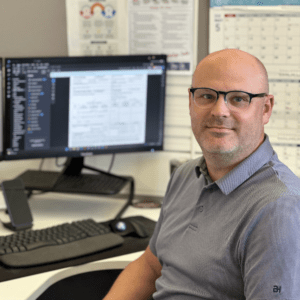 Christian Krogh’s work lives in the middle of complexity. As International Freight and Compliance Manager, he coordinates across teams, manages shifting timelines, communicates with external partners, and helps turn detailed information into action. In his role, speed matters—but clarity matters even more. The right context can prevent rework, reduce confusion, and help the people around him make stronger decisions.
Over the past year, Christian stepped into new responsibilities that stretched him in meaningful ways. He was learning the nuances of compliance, seeing where his strengths created value, and recognizing the areas where he wanted to grow. Like many people, he once believed development meant focusing mostly on weaknesses—working harder to become more well-rounded. But through conversations with his manager, Allen DeHeck, that belief began to shift.
Allen challenged him to think differently: growth did not have to mean carrying everything alone. It could mean deepening his strengths, asking better questions, and learning how to bring the right people into the work. This mindset shift continued when Christian participated in a leadership development program through Kirkwood Community College, one of Clickstop’s learning and development partners. What started as a desire to become more effective in his role became something deeper: a new way of seeing leadership, communication, and the value of growth within the work he was already doing.
Learning to Lead Through Communication
For Christian, the biggest growth did not stay in the classroom. It showed up in the everyday moments—emails, conversations, updates, and cross-functional decisions that affect how work moves. He began to see communication not as a task to complete, but as a leadership practice. The goal was no longer simply to respond quickly. The goal was to help someone else move forward with confidence.
Before, efficiency often looked like speed: quick answers, short updates, and moving on to the next thing. But in a role that touches purchasing, warehouse operations, vendors, and internal stakeholders, speed without context can create gaps. Christian began to pause before communicating and ask a different set of questions.
What does this person need to move forward?
What context are they missing?
How can I make this clear the first time?
That shift changed the way he approached day-to-day work. When coordinating inbound freight, Christian began sharing more than a quick status update. He included timelines, risks, alternative options, and next steps—giving teams the information they needed to act. As he described it, effective communication is not always about “short, quick answers.” Sometimes, it is about providing the context, options, and possible outcomes that allow others to make the best decision. The impact is practical and powerful: fewer back-and-forth messages, faster alignment, stronger decisions, and more trust across teams. This is where Christian’s leadership shows up—not in a title or a formal moment, but in the clarity he creates for others.
Redefining Leadership in Practice
The leadership development experience did more than sharpen Christian’s communication. It reshaped how he defines leadership.
Leadership, for him, is not about having every answer. It is about creating momentum for the people around him.
It’s:
- Translating complexity into clarity
- Anticipating what others need
- Creating alignment across teams
- Taking ownership without needing to control everything
It also meant releasing the pressure to solve everything independently. Instead of trying to carry every detail on his own, Christian began breaking challenges down, involving others earlier, and communicating with more intention. That shift made him a stronger partner across teams and helped him become someone others can rely on when work is complex, urgent, or unclear.
Christian’s growth did not come from a prescribed path. It started with curiosity. He asked questions. He sought feedback. He stayed open to development. That initiative led to conversations that connected him with the leadership program at the right time.
At Clickstop, opportunity is part of the culture—but Christian’s story shows that opportunity often becomes real when people advocate for their growth. And when he took the step forward, he found more than access to learning. He found encouragement, challenge, and support behind it.
Supported Growth, Not Solo Growth
While the program helped shape Christian’s mindset, the environment around him made that growth sustainable. He credits Allen’s leadership style as a meaningful part of his development—not because Allen gives easy answers, but because he creates space for Christian to think, stretch, and build capability over time. That kind of leadership develops more than skill. It builds confidence. It builds ownership. It builds the ability to think critically under pressure. And just as importantly, it creates a sense of safety—the belief that growth is not about perfection, but progress.
“In reality, growth can look like finding those people who can best support you.” – Christian Krogh
That belief changes how people show up. It removes hesitation. It encourages learning. It gives people permission to try, adjust, and improve without fear of getting it wrong. For Christian, that environment made it possible to apply what he was learning in real time and continue growing through the work itself.
Christian’s story is a reminder that growth does not always mean moving into something new. Sometimes, growth means going deeper where you are—refining how you communicate, strengthening how you collaborate, and increasing the value you bring to the people and work around you. The leadership development experience did not change Christian’s role. It changed how he shows up in it—with more clarity, more confidence, and a stronger understanding of how his growth can help others succeed. And that is where the real impact lives.